
15 Proven Ways to Save Money Every Month
Introduction
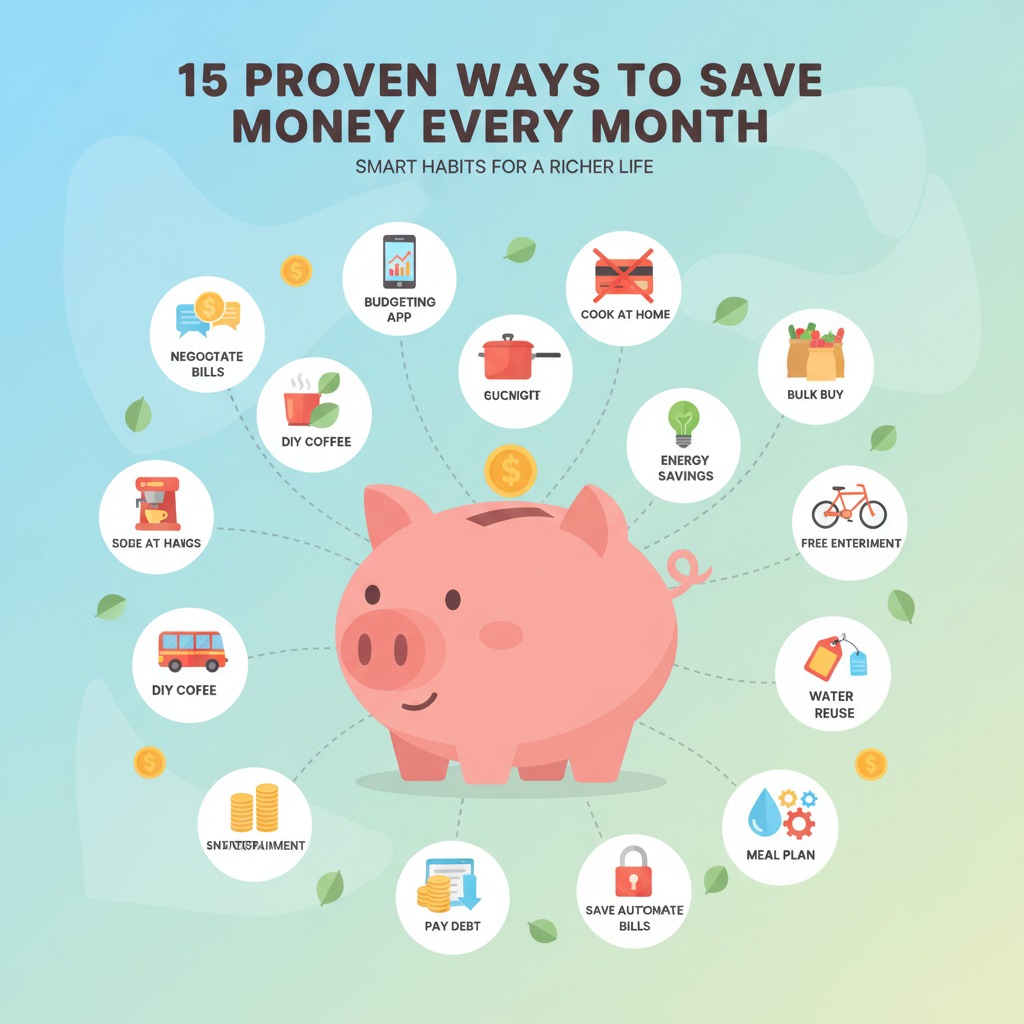
Saving money every month is one of the most reliable ways to improve financial security and reduce stress. Many people believe that saving requires a high income, yet lasting financial progress usually comes from consistent habits. This guide explains practical strategies that can be applied regardless of income level. By making intentional decisions, tracking spending, and avoiding unnecessary expenses, individuals and families can steadily build savings, prepare for emergencies, and work toward long-term goals such as education, home ownership, or retirement.
Saving money every month is one of the most reliable ways to improve financial security and reduce stress. Many people believe that saving requires a high income, yet lasting financial progress usually comes from consistent habits. This guide explains practical strategies that can be applied regardless of income level. By making intentional decisions, tracking spending, and avoiding unnecessary expenses, individuals and families can steadily build savings, prepare for emergencies, and work toward long-term goals such as education, home ownership, or retirement.
Saving money every month is one of the most reliable ways to improve financial security and reduce stress. Many people believe that saving requires a high income, yet lasting financial progress usually comes from consistent habits. This guide explains practical strategies that can be applied regardless of income level. By making intentional decisions, tracking spending, and avoiding unnecessary expenses, individuals and families can steadily build savings, prepare for emergencies, and work toward long-term goals such as education, home ownership, or retirement.
Saving money every month is one of the most reliable ways to improve financial security and reduce stress. Many people believe that saving requires a high income, yet lasting financial progress usually comes from consistent habits. This guide explains practical strategies that can be applied regardless of income level. By making intentional decisions, tracking spending, and avoiding unnecessary expenses, individuals and families can steadily build savings, prepare for emergencies, and work toward long-term goals such as education, home ownership, or retirement.
Saving money every month is one of the most reliable ways to improve financial security and reduce stress. Many people believe that saving requires a high income, yet lasting financial progress usually comes from consistent habits. This guide explains practical strategies that can be applied regardless of income level. By making intentional decisions, tracking spending, and avoiding unnecessary expenses, individuals and families can steadily build savings, prepare for emergencies, and work toward long-term goals such as education, home ownership, or retirement.
Create a Budget
A budget gives every dollar a purpose. Record income, list fixed and variable expenses, compare planned spending with actual spending, and review your budget monthly. Use a notebook, spreadsheet, or budgeting app. A realistic budget helps identify waste and ensures savings become a regular monthly expense rather than an afterthought.
A budget gives every dollar a purpose. Record income, list fixed and variable expenses, compare planned spending with actual spending, and review your budget monthly. Use a notebook, spreadsheet, or budgeting app. A realistic budget helps identify waste and ensures savings become a regular monthly expense rather than an afterthought.
A budget gives every dollar a purpose. Record income, list fixed and variable expenses, compare planned spending with actual spending, and review your budget monthly. Use a notebook, spreadsheet, or budgeting app. A realistic budget helps identify waste and ensures savings become a regular monthly expense rather than an afterthought.
A budget gives every dollar a purpose. Record income, list fixed and variable expenses, compare planned spending with actual spending, and review your budget monthly. Use a notebook, spreadsheet, or budgeting app. A realistic budget helps identify waste and ensures savings become a regular monthly expense rather than an afterthought.
A budget gives every dollar a purpose. Record income, list fixed and variable expenses, compare planned spending with actual spending, and review your budget monthly. Use a notebook, spreadsheet, or budgeting app. A realistic budget helps identify waste and ensures savings become a regular monthly expense rather than an afterthought.
A budget gives every dollar a purpose. Record income, list fixed and variable expenses, compare planned spending with actual spending, and review your budget monthly. Use a notebook, spreadsheet, or budgeting app. A realistic budget helps identify waste and ensures savings become a regular monthly expense rather than an afterthought.
Reduce Utility Bills
Reduce electricity and water usage by switching to LED bulbs, turning off appliances when not in use, improving insulation, fixing leaks, washing clothes in cold water when appropriate, and using energy-efficient appliances. Small reductions repeated every month can produce meaningful annual savings.
Reduce electricity and water usage by switching to LED bulbs, turning off appliances when not in use, improving insulation, fixing leaks, washing clothes in cold water when appropriate, and using energy-efficient appliances. Small reductions repeated every month can produce meaningful annual savings.
Reduce electricity and water usage by switching to LED bulbs, turning off appliances when not in use, improving insulation, fixing leaks, washing clothes in cold water when appropriate, and using energy-efficient appliances. Small reductions repeated every month can produce meaningful annual savings.
Reduce electricity and water usage by switching to LED bulbs, turning off appliances when not in use, improving insulation, fixing leaks, washing clothes in cold water when appropriate, and using energy-efficient appliances. Small reductions repeated every month can produce meaningful annual savings.
Reduce electricity and water usage by switching to LED bulbs, turning off appliances when not in use, improving insulation, fixing leaks, washing clothes in cold water when appropriate, and using energy-efficient appliances. Small reductions repeated every month can produce meaningful annual savings.
Reduce electricity and water usage by switching to LED bulbs, turning off appliances when not in use, improving insulation, fixing leaks, washing clothes in cold water when appropriate, and using energy-efficient appliances. Small reductions repeated every month can produce meaningful annual savings.
Buy Groceries Wisely
Plan meals before shopping, prepare a list, compare unit prices, buy seasonal produce, choose store brands when quality is similar, avoid shopping while hungry, and reduce food waste by using leftovers creatively. Careful grocery planning is one of the fastest ways to lower household expenses.
Plan meals before shopping, prepare a list, compare unit prices, buy seasonal produce, choose store brands when quality is similar, avoid shopping while hungry, and reduce food waste by using leftovers creatively. Careful grocery planning is one of the fastest ways to lower household expenses.
Plan meals before shopping, prepare a list, compare unit prices, buy seasonal produce, choose store brands when quality is similar, avoid shopping while hungry, and reduce food waste by using leftovers creatively. Careful grocery planning is one of the fastest ways to lower household expenses.
Plan meals before shopping, prepare a list, compare unit prices, buy seasonal produce, choose store brands when quality is similar, avoid shopping while hungry, and reduce food waste by using leftovers creatively. Careful grocery planning is one of the fastest ways to lower household expenses.
Plan meals before shopping, prepare a list, compare unit prices, buy seasonal produce, choose store brands when quality is similar, avoid shopping while hungry, and reduce food waste by using leftovers creatively. Careful grocery planning is one of the fastest ways to lower household expenses.
Plan meals before shopping, prepare a list, compare unit prices, buy seasonal produce, choose store brands when quality is similar, avoid shopping while hungry, and reduce food waste by using leftovers creatively. Careful grocery planning is one of the fastest ways to lower household expenses.
Cancel Unused Subscriptions
Review bank and credit-card statements to identify subscriptions you rarely use. Cancel duplicate streaming services, unused gym memberships, forgotten software renewals, and premium plans that no longer provide value. Repeat this review every few months.
Review bank and credit-card statements to identify subscriptions you rarely use. Cancel duplicate streaming services, unused gym memberships, forgotten software renewals, and premium plans that no longer provide value. Repeat this review every few months.
Review bank and credit-card statements to identify subscriptions you rarely use. Cancel duplicate streaming services, unused gym memberships, forgotten software renewals, and premium plans that no longer provide value. Repeat this review every few months.
Review bank and credit-card statements to identify subscriptions you rarely use. Cancel duplicate streaming services, unused gym memberships, forgotten software renewals, and premium plans that no longer provide value. Repeat this review every few months.
Review bank and credit-card statements to identify subscriptions you rarely use. Cancel duplicate streaming services, unused gym memberships, forgotten software renewals, and premium plans that no longer provide value. Repeat this review every few months.
Review bank and credit-card statements to identify subscriptions you rarely use. Cancel duplicate streaming services, unused gym memberships, forgotten software renewals, and premium plans that no longer provide value. Repeat this review every few months.
Cook at Home
Home-cooked meals usually cost much less than restaurant meals and often provide healthier nutrition. Prepare meals in batches, pack lunches for work, and learn a few simple recipes that rely on affordable ingredients.
Home-cooked meals usually cost much less than restaurant meals and often provide healthier nutrition. Prepare meals in batches, pack lunches for work, and learn a few simple recipes that rely on affordable ingredients.
Home-cooked meals usually cost much less than restaurant meals and often provide healthier nutrition. Prepare meals in batches, pack lunches for work, and learn a few simple recipes that rely on affordable ingredients.
Home-cooked meals usually cost much less than restaurant meals and often provide healthier nutrition. Prepare meals in batches, pack lunches for work, and learn a few simple recipes that rely on affordable ingredients.
Home-cooked meals usually cost much less than restaurant meals and often provide healthier nutrition. Prepare meals in batches, pack lunches for work, and learn a few simple recipes that rely on affordable ingredients.
Home-cooked meals usually cost much less than restaurant meals and often provide healthier nutrition. Prepare meals in batches, pack lunches for work, and learn a few simple recipes that rely on affordable ingredients.
Build an Emergency Fund
An emergency fund protects you from unexpected expenses such as medical bills, repairs, or temporary job loss. Start with a small goal, automate transfers to savings, and increase contributions whenever income rises.
An emergency fund protects you from unexpected expenses such as medical bills, repairs, or temporary job loss. Start with a small goal, automate transfers to savings, and increase contributions whenever income rises.
An emergency fund protects you from unexpected expenses such as medical bills, repairs, or temporary job loss. Start with a small goal, automate transfers to savings, and increase contributions whenever income rises.
An emergency fund protects you from unexpected expenses such as medical bills, repairs, or temporary job loss. Start with a small goal, automate transfers to savings, and increase contributions whenever income rises.
An emergency fund protects you from unexpected expenses such as medical bills, repairs, or temporary job loss. Start with a small goal, automate transfers to savings, and increase contributions whenever income rises.
An emergency fund protects you from unexpected expenses such as medical bills, repairs, or temporary job loss. Start with a small goal, automate transfers to savings, and increase contributions whenever income rises.
Additional Proven Ways
- Pay yourself first by transferring savings automatically.
- Avoid impulse purchases using a 24-hour waiting rule.
- Compare insurance and service providers annually.
- Use cashback and loyalty programs responsibly.
- Buy quality products that last longer.
- Negotiate recurring bills such as internet or phone plans.
- Sell unused household items.
- Use public transport or carpool when practical.
- Track spending weekly to stay accountable.
Frequently Asked Questions
How much should I save each month?Aim for a consistent percentage of income and increase it gradually.
Should I save or pay debt first?Build a modest emergency fund while prioritizing high-interest debt.
Do budgeting apps help?Yes, they simplify tracking and reporting.
Is cooking at home really cheaper?In most cases, yes, especially when meals are planned.
How long should an emergency fund last?Three to six months of essential expenses is a common target.
Conclusion
Saving money every month is a journey built on consistent habits rather than dramatic sacrifices. By budgeting carefully, reducing unnecessary expenses, planning purchases, and reviewing progress regularly, you can steadily improve your financial position and achieve long-term goals with confidence.
Saving money every month is a journey built on consistent habits rather than dramatic sacrifices. By budgeting carefully, reducing unnecessary expenses, planning purchases, and reviewing progress regularly, you can steadily improve your financial position and achieve long-term goals with confidence.
Saving money every month is a journey built on consistent habits rather than dramatic sacrifices. By budgeting carefully, reducing unnecessary expenses, planning purchases, and reviewing progress regularly, you can steadily improve your financial position and achieve long-term goals with confidence.
Saving money every month is a journey built on consistent habits rather than dramatic sacrifices. By budgeting carefully, reducing unnecessary expenses, planning purchases, and reviewing progress regularly, you can steadily improve your financial position and achieve long-term goals with confidence.